Market Hours: A Morning at Makola
Before the city settles into traffic, the market has already had three conversations.
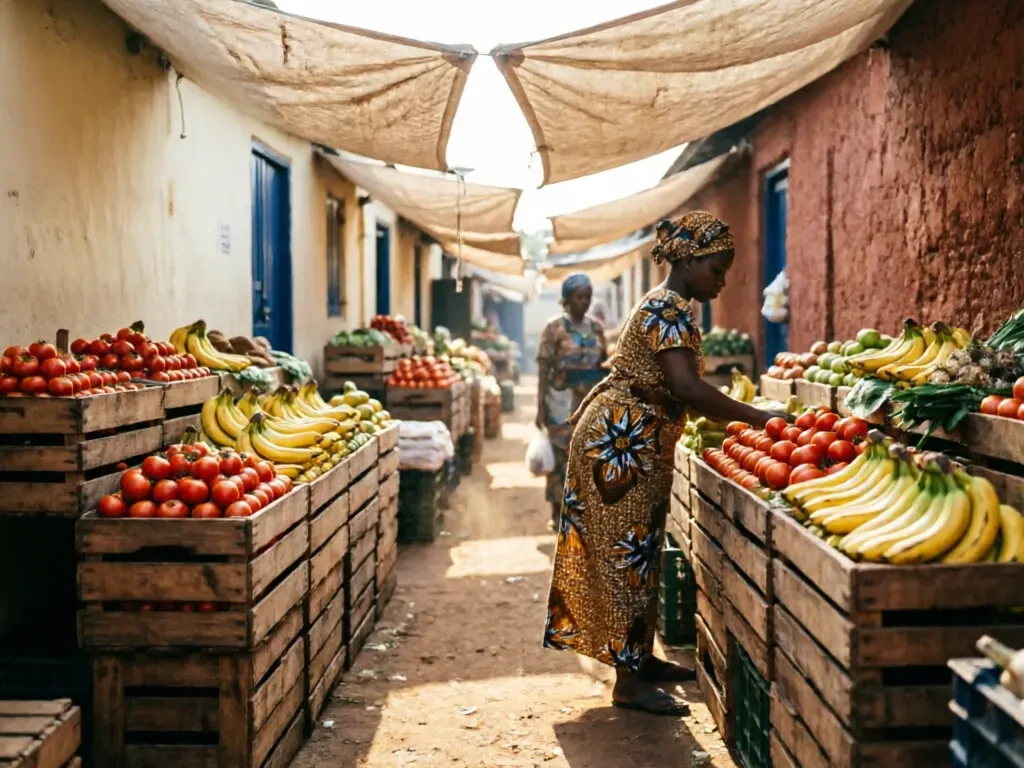
By half past five the market is already a finished thing. The awnings are up, the crates are stacked, the first wholesale buyers have loaded and left. What arrives later, at eight or nine, is not the market beginning. It is the market at its most crowded, which is a different event.
The people who work here talk about the day in hours the way an office talks about meetings. The first hour belongs to the drivers. The second belongs to the resellers, who come with a list and leave quickly. The third belongs to everyone else.
The first hour
Everything at Makola starts with a vehicle. A truck arrives from the Volta region with tomatoes packed in layers, and within twenty minutes the load has been counted, argued over, and divided among four or five women who will each sell it differently. The counting is done out loud. The argument is usually about the bottom layer.
This is the part of the market that the city never sees, and the part that decides the price of a tomato in a shop in Osu two days later. It happens in a lane barely wide enough for a handcart, in near darkness, at a speed that looks like chaos and is not.
If you come at nine you see the market. If you come at five you see the business. They are not the same job.
The second hour
By six, the resellers have arrived. They move in a particular way: a list in one hand, a bag in the other, no browsing. A good reseller can complete a round of six stalls in eleven minutes. They buy in quantities that would surprise a household shopper, and they are gone before the lane fills.
The stallholders treat them with a formality that is easy to miss. Prices are quoted flatly. There is no theatre. The theatre is reserved for later, for the shoppers who arrive without a plan and need to be talked into one.
The third hour
At seven the market changes register. The lanes fill with people buying for the day, the awnings begin to trap heat, and the noise moves from functional to conversational. Somebody is playing music from a phone. Somebody is frying something. A child is asleep on a stack of sacks, entirely undisturbed.
This is the hour most photographs of the market are taken, and it is the least representative. The market at seven is a place people visit. The market at five is a place people run.
By ten, the serious trading is over. What remains is the long tail of the day: the last of the produce, the conversations that were postponed, the slow negotiation between a trader and a buyer who both know the price will fall by noon. The market does not close. It simply stops being urgent.
Filed under
About the author
Nana Yaa Adjei
City life correspondent
Nana Yaa reports from markets, transport terminals and courtyards, usually before seven in the morning.